
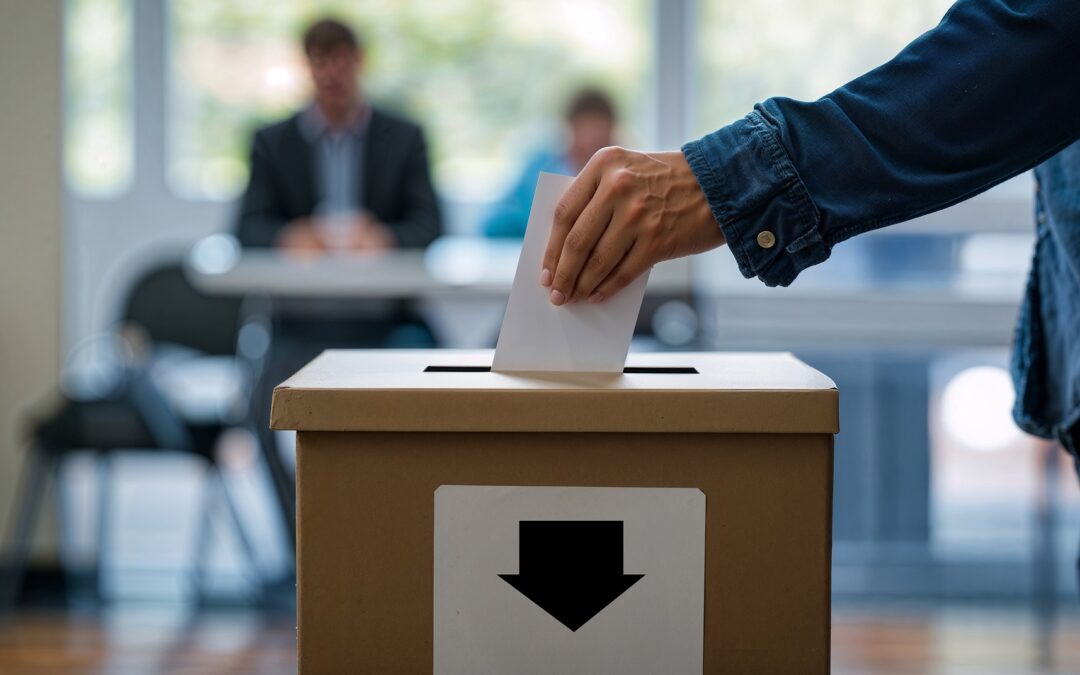
The central premise of election integrity is to authenticate the voter, the ballot, and the count. All of this relies on the integrity of the systems we employ in the voting process. In the previous article, we discussed how to authenticate the voter. This article will focus on how to authenticate the ballot.
How are ballots created? How are ballots distributed to voters? How are ballots managed through the process? The answers to these questions reveal possible vulnerabilities in the ballot’s authentication. Each state and sometimes local governments determine the specifics for their area.
Let’s begin by examining the many ways people can vote. Each offers the voter convenience, accommodates special circumstances, and attempts to garner increased participation in voting.
Absentee Voting
You can view an absentee ballot and learn more about the absentee application process by viewing this video created by the Knox County Election Commission. This process requires an application to receive the absentee ballot. The individual then completes the ballot and returns it by mail to the Election Commission.
Early Voting
All registered voters can choose to vote early in Knox County. Knox County offers eleven locations for the upcoming 2026 April/May election. When voters use a Vote Center, they receive a Ballot on Demand. The election worker prints a ballot based on the voter’s address and it includes all offices that individual is eligible to vote in for the election. The voter completes the ballot, takes it to a scanner, and the ballot is stored in a locked device.
Election Day Voting
Those who vote on election day vote at their assigned precinct. Election workers use books that contain all the registered voters residing at addresses within the precinct. Voters sign their name. The signature must match the signature already in the book, for the voter to receive a ballot.
Each Voting Method Poses Specific Challenges for Authenticating the Ballot
1. There is No Uniform Standard Applied to Ballots
Ballots are issued to Absentee Voters, Early Voters, and Voters on Election Day. While the ballots present the same candidates, the physical characteristics of the ballot differ.
Because each jurisdiction determines the security measures on the ballot, there is no uniform standard applied. The consistent use of serialized, watermarked ballots or similar security paper features would help officials reliably distinguish genuine ballots from counterfeit or duplicated ballots.
2. Electronic Voting and Tabulation Systems Are Susceptible to Problems
According to the Election Integrity Network (EIN), electronic systems (voting machines, tabulators, election‑management systems) are susceptible to remote access, hacking, and software manipulation. Proprietary, non‑transparent software makes it impossible for the public to fully verify that electronic tallies match the underlying paper ballots.
3. There is a Weak Link Between Each Ballot and a Verified, Unique Voter Record
State coalitions that work with EIN state that large‑scale mail voting introduces “dubious” or “phantom” ballots whose chain of custody and source cannot always be verified, especially when ballots are accepted after Election Day or when voter‑written dates or identification information are missing or inconsistent.
A Real Life Example of These Challenges From Fulton County
These challenges are born out in the recent investigative report released on January 6, 2026, by the Election Oversight Group, which details 26 counts of potential violations and irregularities in Fulton County’s handling of the 2020 General Election. Drawing from official records, it paints a picture of systemic failures that raise serious questions about the integrity of the process.
- Ballot Count Discrepancies: On November 4, 2020, Georgia Secretary of State Brad Raffensperger stated on national television that only about 94,000 ballots remained to be counted statewide, with President Trump leading by over 103,000 votes. Yet, the final tally included over 5 million ballots—adding roughly 300,000 more than expected. In Fulton County alone, absentee ballots doubled from 74,000 reported on Election Day to approximately 148,000 by the time counting concluded, with no clear explanation.
- Absentee Ballot Issues: Over one million “extra” absentee ballots were ordered by Fulton County on October 16, 2020—after the mailing deadline – without required envelopes or stubs. Tens of thousands arrived at State Farm Arena in unsecured carts post-Election Day, lacking chain of custody documentation. Shockingly, only six absentee ballots were rejected for signature mismatches out of ~148,000, indicating a near-total failure in signature verification.
- Digital Record Destruction: No digital records exist for any of the 376,863 in-person votes cast in Fulton County, with all corresponding ballot images were reportedly destroyed in violation of law. For the ~148,000 absentee ballots, 132,284 lack SHA authentication files (digital “fingerprints”), and 132,286 SHA files appear deleted, many with anomalous metadata suggesting deliberate manipulation.
- Voter-Ballot Mismatch: Official records show 148,319 absentee ballots counted, but only 125,784 voters credited with casting them—resulting in 22,535 more ballots than voters.
- Early Voting and Tabulator Problems: For 315,000 early votes, no required backup records like daily recap sheets or voter lists exist. Tabulator records are incomplete: only nine of 148 tabulators have mandatory open/zero tapes, and 20,713 ballots are attributed to non-existent machines. Memory cards were unlawfully swapped, seals broken, and returns printed on surrogate machines.
- Recount Anomalies: The post-election hand count added 6,691 fictitious votes that were never corrected or investigated. Another 13,000-vote discrepancy emerged compared to original results, 3,930 ballots were double-counted, and hundreds of test ballots were included in official totals. Thousands of ballots appear in one count but not the other.
- Broader Systemic Failures: The report documents unauthorized access to election systems, failure to test machines properly, disabling ballot paper authentication statewide, and providing encryption keys insecurely. It also notes over 103% voter registration in Georgia (113.8% in Fulton), unaccounted-for ballots, and unfulfilled promises of audits by state officials.
Conclusion
As noted in the report’s comprehensive overview, these issues stem from fundamental lapses, including reprogramming voting systems just before the election without re-testing and intentional removal of authentication files. The testimony from Dr. Philip Stark in Curling v. Raffensperger underscores the severity: Fulton County lacks basic accounting controls, making it impossible to determine the true winner, with electronic records “not intact”.
Even if you disagree with the findings of this report, you will find that every aspect of the vulnerabilities described is addressed as a part of the Save America Act. So it seems that key legislators, Senators, and the President of the United States believe that serious reforms are needed to ensure the accuracy of our election process. In the final part of this series, we will examine how to authenticate the count.