
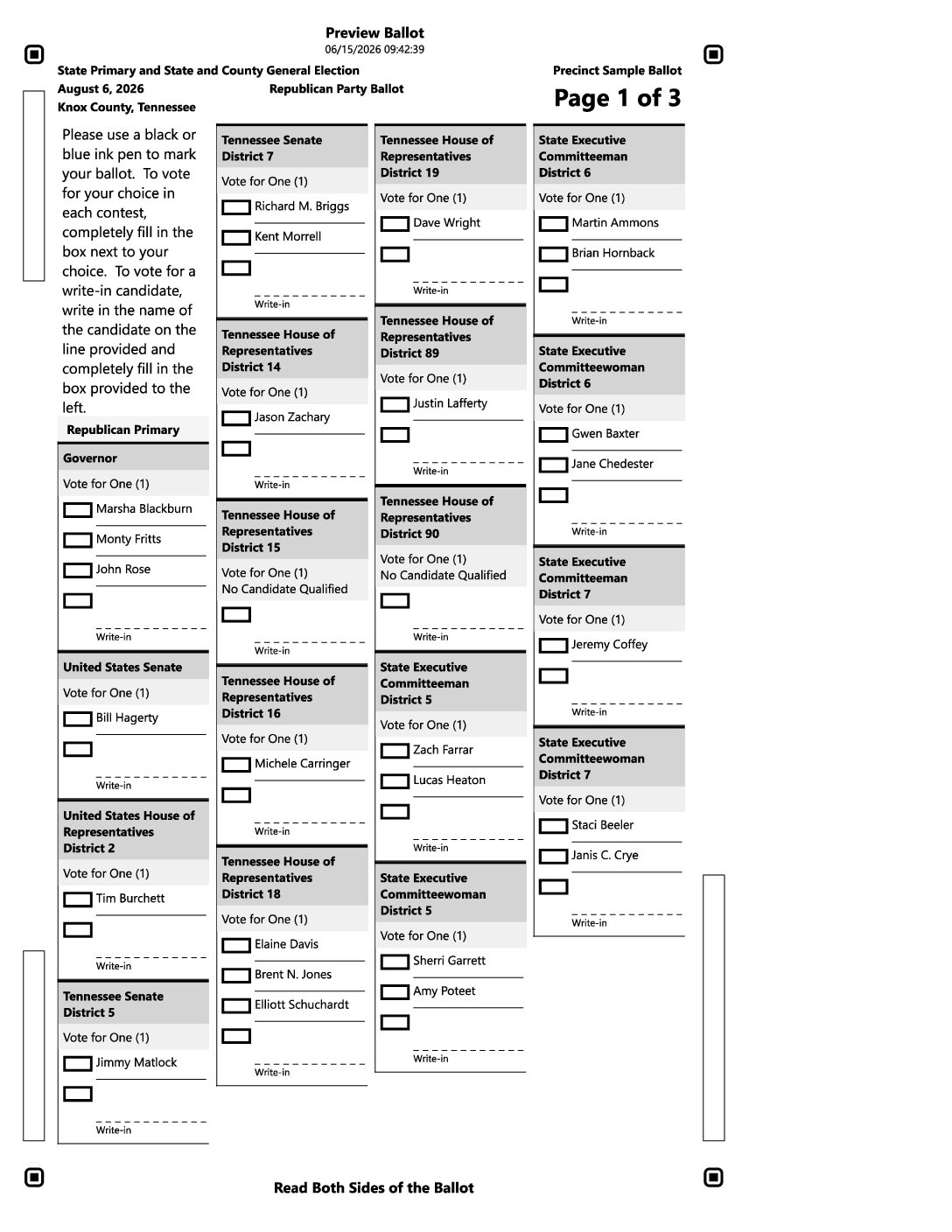
Election Day is just around the corner. In fact, early voting starts next week on July 17. You are planning to vote, right? There is nothing worse than showing up, receiving your ballot, starting to fill it out, and realizing you are not sure what some of the positions are or what they do. Many people end up guessing, choosing candidates based on name recognition or ballot order, and then wondering afterward if they made the right decision.
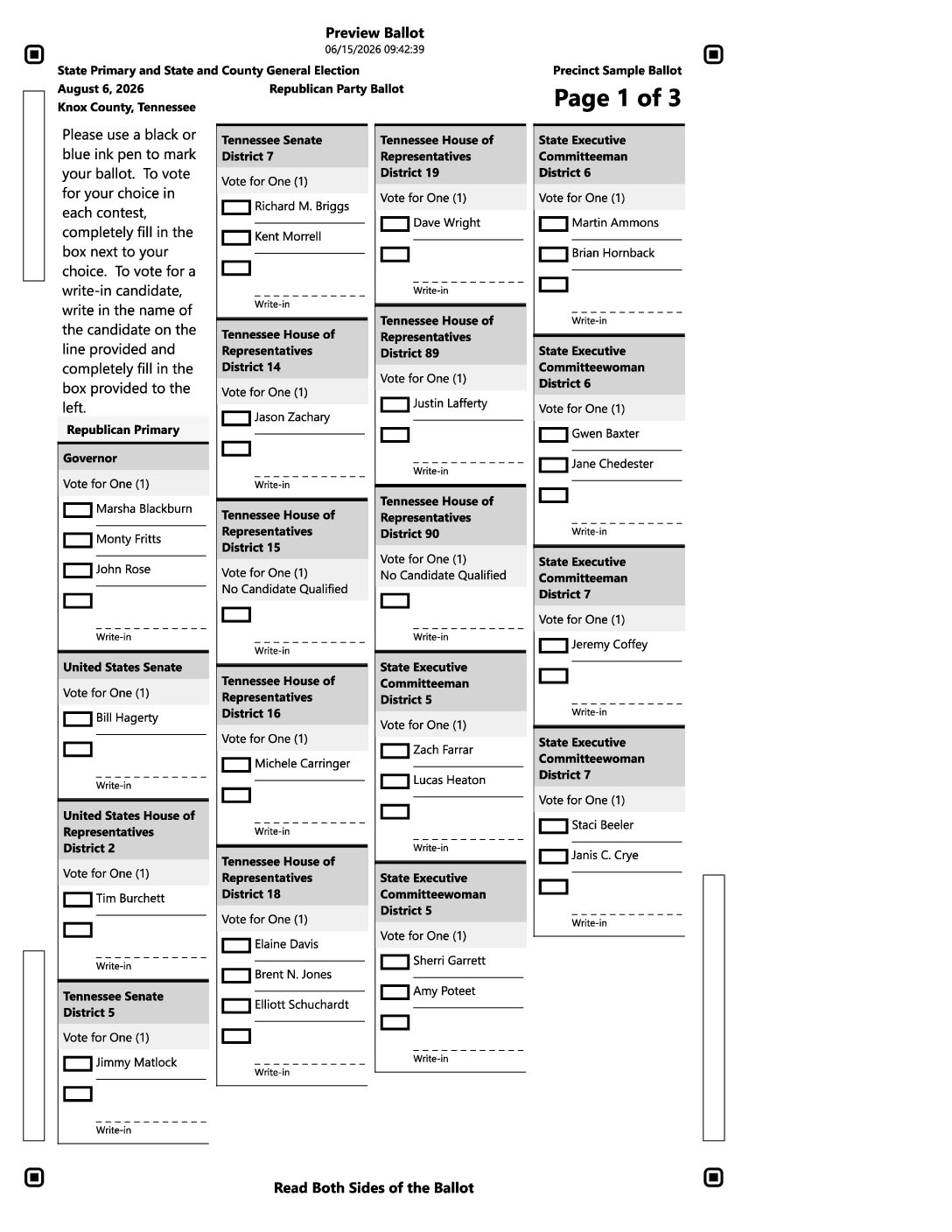
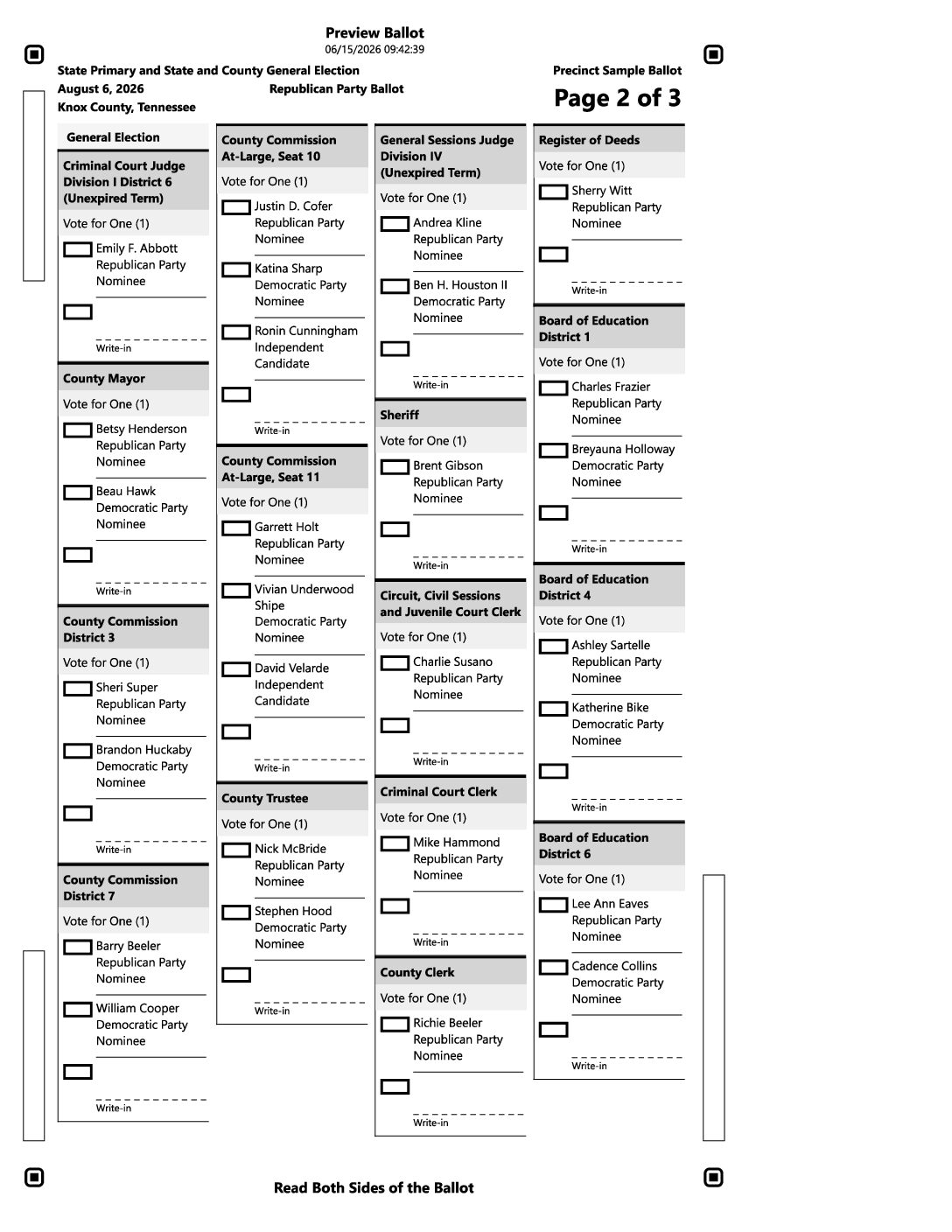
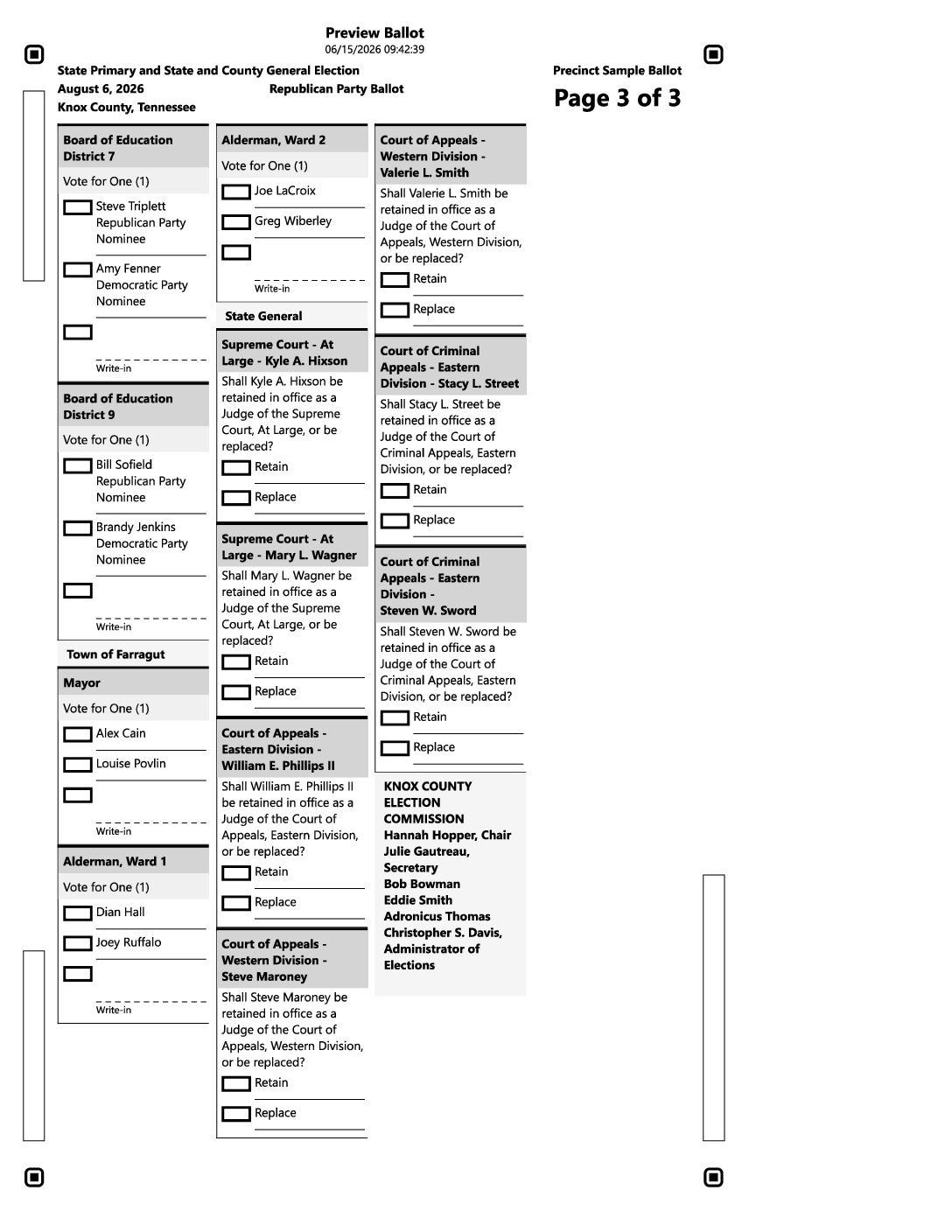
This post is meant to help with that. We are going to walk through what the ballot looks like so there are no surprises. We have included the entire preview Republican Party ballot at the end of this post. We will keep things simple so you can easily share this with others. Our goal is to help as many people as possible get out to vote—and to feel confident about what they are voting for.
To begin, your ballot will not look exactly like the Republican Party Ballot pictured at the bottom of this post. You will only see the offices that apply to your district. If you are not sure which district you are in, you can click here to find out. You will also notice that you are voting in two different elections at the same time: the State Primary and the County General Election. Here is what that looks like:
The State Primary Election
As you can see on the ballot, the offices up for vote include Governor, U.S. Senator, U.S. House of Representatives, Tennessee Senate, and Tennessee House of Representatives. In this election, you are choosing a party’s nominee who will go on to run in the General Election in November.
Some of these races may be uncontested, and your specific state senator or representative may not be up for reelection this cycle. Still, it is important to complete the entire ballot. Do not stop after voting for the top races and be sure to read both sides of the ballot.
What Is a State Executive Committeeman or Committeewoman?
This is a position many voters overlook. The State Executive Committee (SEC) has received more attention recently, particularly during discussions about election disputes, which left many voters wondering who these members are and what they do.
Many people do not realize they have voted for these positions before. In past elections, some voters simply selected a name based on familiarity or ballot order because the role was unclear.
The SEC is made up of members elected every four years. It plays an important role within the political party, including helping determine candidate qualifications under party rules, shaping party direction, supporting fundraising efforts, and representing the state at the national level through the Republican National Committee (RNC).
While it is not the only authority in election matters, the SEC does have meaningful influence over who appears on the party’s ballot. That makes this a position worth paying attention to. You can find our endorsed SEC candidates on our website and Facebook page, and learn more in our detailed SEC blog post by clicking here.
The County General Election
Now let’s look at the County General Election. Earlier this year, each political party selected its candidates for county offices. In August, those candidates will face off to determine who will hold each position.
These positions include County Mayor, County Sheriff, County Commissioners, Board of Education, County Trustee, Criminal Court Clerk, Circuit Court Clerk, Civil Sessions Court Clerk, Juvenile Court Clerk, County Clerk, Register of Deeds, Criminal Court Judge, and General Sessions Judge.
While many people are familiar with the roles of mayor and sheriff, other positions are less well known. That is why we created a section on our website called Knox County Government 101, where we explain the responsibilities of each office.
For a quick overview, County Commissioners hold significant authority. As recent events have shown, their responsibilities include passing ordinances and resolutions, approving the county budget, and setting property tax rates.
The Knox County Board of Education consists of nine elected members representing the city of Knoxville, Knox County, and the town of Farragut. This board oversees and manages the entire Knox County school system, including appointing the superintendent and managing the school budget.
The Knox County Trustee is responsible for collecting property taxes and managing the county’s finances. According to the website, the trustee manages a professional operation that collects and accounts for over $1 billion annually in state, federal, and local funds used to operate Knox County government.
Many other positions on the ballot may be uncontested, but they still play important roles. If you would like to learn more about offices such as the Register of Deeds or County Clerk, you can click here.
The State General Election
The State General Election portion of the ballot includes judicial retention elections. In these races, voters are asked whether to retain or remove certain judges.
These judges are typically appointed and then periodically appear on the ballot for retention. Voting to retain allows the judge to remain in office, while voting to remove creates a vacancy that is filled through the appointment process. This system is designed to give voters a voice while maintaining stability in the judiciary.
Final Thoughts
This has been a quick overview of what to expect on the ballot for the August 6 election. If you plan to vote early, those dates run from July 17 through August 1. Click here for early voting locations and here for hours.
If you are unable to vote in person, the deadline to request an absentee ballot is Monday, July 27. You can do that by clicking here. If you’re someone who loves to wait until Election Day, click here to find your voting location. We hope that you’ll also share this post with all your friends so they can be prepared too.
Now let’s get out and vote—and make informed decisions when we do.
Excellent!
Thanks, Christy. We appreciate your support.